Saturday, March 5, 2022

Six more weeks on campaign trail as Congress takes pre-election recess

Patria’s tenrec (the animal symbol of Patria, as proclaimed by Act of Congress in 2018) saw its shadow – or perhaps didn’t see its shadow – today, meaning there are six more weeks of campaigning until 52nd Congress Election Day, April 16.

After a rare Saturday session that capped off days of marathon debates on tax reform and tax cuts for 2023, the Fourth Session of the 51st Congress (4·LI 2021-22) adjourned for the traditional, though unwritten, pre-election recess in order to allow Congress members to hit the campaign trail in their home Precincts and districts. Congress will return a few days after the Election Day/Patriots’ Day weekend for the also traditional Lame Duck session, which will conclude a day or two before Inauguration Day.

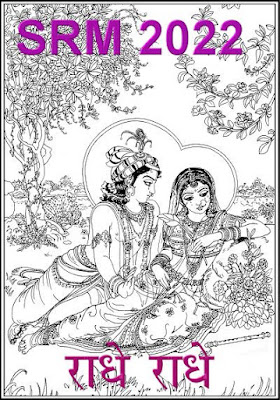
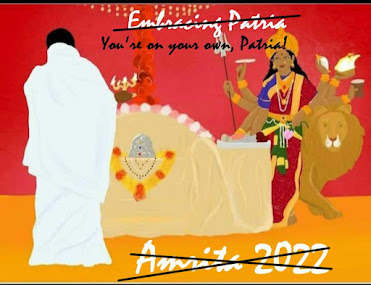
Although supporters of the defunct Amrita Party tend to be parking their vote with the Social Democrats or Chakra Party, the SRM is fighting hard for their votes. The newest SRM campaign posters feature the goddess Kali and a new slogan “WHOSE PATRIA? OUR PATRIA!” along with the SRM's usual "Patria first".


Saturday, February 12, 2022

“Radio and Trust” as Patria celebrates World Radio Day 2022


While not an official public holiday where schools and businesses are closed, Patria celebrates World Radio Day on February 13.

Radio is a powerful medium for celebrating humanity in all its diversity and constitutes a platform for democratic discourse. At the global level and even in unrecognized micronations such as Patria, radio remains the most widely consumed medium. This unique ability to reach out the widest audience means radio can shape a society’s experience of diversity, stand as an arena for all voices to speak out, be represented and heard. Radio stations should serve diverse communities, offering a wide variety of programs, viewpoints and content, and reflect the diversity of audiences in their organizations and operations.

Radio continues to be one of the most trusted and used media in the world, according to different international reports. The theme of the 2022 edition of World Radio Day is thus devoted to "Radio and Trust", with the following sub-themes: trust in radio journalism (produce independent and high quality content), trust and accessibility (take care of your audience) and trust and viability of radio stations (ensure that radio survives and remains sustainable even in times of financial crisis, war, revolution or pandemic).

This year also marks the centennial of broadcasting in Patria, as legendary AM stations such as PMC-846, POKX-648 and PMBC-1152 signed on in 1922. Patria’s national broadcasting network, the Voice of Patria or Ramrajyavani, was inaugurated in 1926. In 2001, Patria Post issued a commemorative stamp to mark its 75th anniversary.


PMC celebrating 100 years on the air.

Radio, of course, plays a major role in Patria’s 2022 election campaign. All radio stations in Patria are required to broadcast paid political announcements. The following are some of the campaign slogans that are heard on Patria’s airwaves, and will be heard every day until Election Day, April 16. All campaigning and electioneering, including radio ads, must end at 11:59 PM April 15. 

SRM: “Patria First”, “Take back the economy”

Chakra Party: “Patria’s inner voice”, “Inquire within for real change” 

Social Democrats: “For the Workers, not the Wokesters”, “Progress with a purpose” 

National Union: “Big dogs for real men”, “Don’t be a pussy” 

Jungle Party: “Have a take, don’t suck”, “Step your game up and make Patria better” 

Green Party: “Bikes not cars”, “For a sustainable Patria” 

Chastity Party: “Because sex is dirty” 

Family Values Party: “1950s values for the 2020s” 

Libertarian Party: “More freedom, less government” 

Reconstruction Party: “Building a new Patria from the ashes of the old” 

Incel Party: “Giving virgins a voice” 

Lilith Party: “Vulvas for victory”

Saturday, February 5, 2022

Chakra Party: we love cats

While the National Union considers owning a dog (particularly a big one like a Pit Bull or Rottweiler) a test of manly character, the Chakra Party is appealing to cat owners. The party that bills itself as “Patria’s inner voice” says men who love cats are not pussies. Along with the Chakra Party’s usual posters and outdoor ads featuring, well...duhhhh, chakras, they’ve got a kitty poster girl – a Calico cat named Chandi, who you can follow on Facebook.


With the Beijing Winter Olympics underway, and as usual, micronations such as Patria shut out of the Games, the SRM is cranking up the “to hell with China” message another notch.


Sunday, January 30, 2022

“Don’t be a pussy!” as NU plays the Law and Order card

To virtually no one’s surprise, the National Union is campaigning hard on a Law and Order platform that can be summarized as pro-cop and anti-cat. Even more than National Unionists despise soft-on-crime liberals, they detest men who don’t like dogs, are scared of dogs, or who own cats. In the NU’s macho world, dogs are equated with manliness, loyalty and obedience, while cats are useless and effeminate as no police force has ever employed a feline unit and no home has ever been protected by a guard cat. No police department in Patria is in danger of being defunded, violent crime is generally quite rare in Patria, and most cops in Patria do not carry guns while walking foot patrols (but like London Bobbies, they do have nightsticks and know how to use them!) but nonetheless the NU is playing the pro-cop Blue Lives Matter (#bluelivesmatter) card to the hilt.

The NU’s 2022 campaign slogan found on posters and broadcast ads: “Don’t be a pussy!” referring both to cats and the female genitalia.


Finally, a reminder that Omicron is a street in Patria’s capital city Castoropolis (Kashipura). A very pleasant street that passes through the campus of the University of Castoropolis to boot. Patria has never imposed mask mandates, lockdowns, school closures, vaccine passports, or any other COVID-19 restrictions, other than focused protection in nursing homes, long-term care centers and the like. No party contesting the 2022 election is in favor of such things.


Monday, January 17, 2022

SRM playing “To Hell with China” card hard again


SRM campaign poster
Typical SRM campaign poster

Just as in 2018, the SRM is again campaigning hard on a PATRIA FIRST and TAKE BACK THE ECONOMY platform, rooted in the old concept of Swadeshi or total self-sufficiency in domestic production, rather than dependence on imported goods. 

Despite the “NO MORE CHINESE JUNK” and “BRING THE JOBS HOME” ranting in the SRM’s print and broadcast messages, the Party has not offered any substantial plan for how the manufacture of typically Chinese-made consumer goods – pretty much everything from computers and electronics to rupee-store crap – will be re-established in Patria (or for that matter in Canada, the US or any other First World macronation) without causing the price of those goods to skyrocket, assuming that the factories can even be built in Patria and enough workers can be found who are willing to accept even Patria’s generous minimum wage.


Needless to add, the SRM is also spewing out anti-China hate for unleashing COVID-19 on the world, likely through an accidental lab leak. The common Patrienish phrase for COVID is grippí Chínië – literally “Chinese flu”. 

In-your-face Hinduism plus Patria First economic nationalism! Does that sound like a winning combination, particularly when attempting to draw votes from the now-defunct Amrita Party?

Sunday, December 26, 2021

Amrita Party dissolves for 2022


After making only a token effort thus far on the 2022 campaign trail, the Amrita Party has announced its permanent dissolution and will not be seeking seats in the 52nd Congress. The Party released a communiqué full of COVID-19 cliché phrases such as “out of an abundance of caution”, “we’re all in this together” and “it is with a heavy heart that the Amrita Party is closing operations permanently”. Holding 78 seats, the Amrita Party was the second-largest caucus in the 51st Congress, behind only the Social Democrats’ 96 seats.

The Amrita Party was established in 2001 as the voice of Amma’s Patrienish devotees with Amma as House leader in Congress, representing the Precinct of Arboria. The party was generally liberal-progressive, reflecting the political views of the vast majority of Amma’s western devotees in the macro-world (notwithstanding that conservatives, Republicans, and even die-hard supporters of Donald Trump go for Amma’s darshan too!). During its twenty years, the Amrita Party can boast of some major achievements in Patria that will continue the party’s legacy in 2022 and beyond:

  • Inclusion of Amma's teachings and bhajans (devotional songs) in the curriculum of many of Patria's elementary schools.
  • Opening of a branch of the Amrita Institute of Medical Sciences (AIMS) hospital in Patria.
  • Establishment of a campus of the Amrita University in Patria.
  • Establishment of a permanent Amma ashram in Patria, in Karunanagar, Caesarea, easily accessible via the Caesarea Coast Line of the Castoropolis and Caesarea Railways (CCR).
  • Addition of Amrita Television to all basic cable TV services in Patria.
Where does the Amrita Party’s demise leave the 78 members of the caucus? They will continue to hold their seats in Congress until their terms expire on June 30, 2022. Some will sit as independents for the remaining six months of the 51st Congress term of office, while others will call themselves IAM – Independent Amrita Members – and hope for enough write-in votes or for the Amrita Party to remain printed on their precinct’s ballot so that they have a puncher’s chance of retaining a seat in the 52nd Congress. But they shouldn’t count on many write-in votes. Most of the voters/devotees who cast ballots for Amrita in 2018 will gravitate to the Chakra Party, Greens or Social Democrats. But don’t assume that all Amrita voters are liberal, leftist or progressive (see reference to conservatives also going for Amma’s darshan). A fair number of Amrita voters will go for the SRM in 2022. 

The fact that Amma could not set foot outside her ashram in Kerala or hug her millions of devotees, let alone visit Patria because of COVID-19 is a convenient whipping boy for the Amrita Party’s demise. On the right-wing talk stations such as POKX-648, SRM’ers and National Unionists were gloating that Amrita had run its course, is now a spent force and the Amma gravy train (or hugging train) has come to a halt.

Not exactly the message from Amma that Patria hoped to hear.


Saturday, December 18, 2021

Visit Patria’s capital city – where Delta and Omicron are streets!

 COVID-19 travel restrictions got you down? Do you want to visit someplace where you don’t have to wear masks indoors, don’t have to be tested or quarantined on arrival, and don’t have to produce a vaccine passport along with your regular passport? Someplace where bars, restaurants and other indoor gathering places are not subject to capacity limits and other restrictions? Consider a visit to Patria! The following visitor’s guide to Castoropolis is based on one of Patria’s old long-defunct Geocities web pages dating from the Clinton administration.

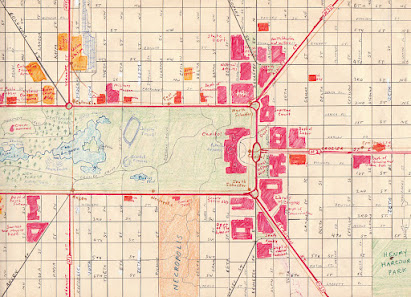
 Patria's capital city and its largest city, Castoropolis -- known in Sanskrit as Kashipura -- contains features of other capital cities planned and built from scratch in the modern era, such as Washington, Brasilia, Canberra, and New Delhi - particularly in its radial street layout in which the Capitol is the central hub, wide boulevards and diagonal connecting streets, and central green space or "Common". It is centered on the Island of Castoropolis, a nearly round island in the St. Joseph River - which has since been officially renamed Naya Ganga or New Ganges.  In the years following the Dharmic Revolution of 1989-90 many Anglo-sounding names of places and streets in Patria have been Sanskritized. But just as in India, where English street names in New Delhi and Bombay have been replaced by Hindi or Sanskrit names and even the name of Bombay has been changed to Mumbai, the new names have generally failed to catch on despite the best efforts of the government. In the text that follows, all official Sanskrit re-namings are indicated in [square brackets].

 Orientation:

Castoropolis was established as Patria's permanent capital city by act of the First Congressus Patriaë in 1818, only a few months after Independence, while Congress met in the temporary capital of Hammond, Caesarea. In the 1820s the new city was planned and built with obvious inspiration from the plan of Washington, DC designed by Pierre L'Enfant.  The Federal District of Castoropolis, whose boundaries are co-extensive with the city itself, is entirely surrounded by several cities, towns, and suburban sprawl in the Precinct of Caesarea.  The original area of the Federal District of Castoropolis consisted only of the Island of Castoropolis.  By the turn of the 20th century the city's built-up areas had expanded beyond the limits of the island and so in 1917 an act of the 25th Congress incorporated into the Federal District several towns and villages in the Precinct of Caesarea on the east side of the Naya Ganga. One town, Crozier Heights, fought the annexation and remains part of CaesareaCrozier Heights is an upper-class enclave, like Toronto's Forest Hill or Montreal's Westmount, home to much of Patria's Jewish community.

The Capitol building, which houses the Congressus Patriaë, is the central focus of Castoropolis. Located only a few metres east of the geographic centre of the Island of Castoropolis, its dome and rotunda are very similar in appearance to the United States Capitol.  Extending west from the Capitol is Castoropolis Common [Bhavani Bagh], a large central park. In fact, Castoropolis Common is not unlike New York City's Central Park, offering a large open field for concerts, numerous recreational facilities, wooded areas, and secluded spots for doing yoga. In the 1970s and 80s the Common served as a hangout for drug dealers, muggers, rapists, homeless bums and other assorted sleaze, and travelers were advised to visit during daylight hours only, but it has since been cleaned up, thanks in part to the Federal District government that was led by the law-and-order National Union in the 1990s and early 2000s. A gridiron pattern of residential streets is superimposed on the radial/diagonal plan.  Streets running east and west are numbered (beginning with First Street, one block north and south of the Capitol and the baseline streets: Crozier St. East [Shankaracharya Marg] and Justice St [Dasharath Marg]), while streets running north and south - with the exception of four major arteries - have Greek letters (beginning with Alpha Street one block east and west of the Capitol and the baseline street: Schaefer St [Shakti Marg]), continuing until Omega Street. The island is divided into four quadrants, relative to the Capitol: North West, North East, South West and South East, similar to Washington, DC. Thus there may be as many as four intersections of , for example, Sixth and Gamma Streets:  NW, NE, SW,  and SE.

Downtown area


The map above details the central business district at the western end of the Common. St. Joseph [Radha-Krishna] Station handles mainly local commuter trains; most inter-city rail traffic runs out of Union [Mahasabha] Station, a neo-Gothic rockpile (à la Bombay's Victoria Terminus) located at 4th and Vermont [Vaikuntha Marg] NW.  Hector [Hanuman] St. was once the capital's truly slimy side, in the last century teemng with hookers, pimps and drug dealers.  The Hector Hotel, at Hector and 4th St. SW, used to be a notorious whore-house before it was renovated and became a guest house for visiting swamis, swaminis, sadhus and sadhvis (Hindu holy men and women). If you find a couple of churches but don't see any Hindu temples marked on this map, there's a reason for it: this map dates from 1976, long before the Dharmic Revolution.

Central/midtown area

The map above details the eastern end of the Common and the many government buildings surrounding the Capitol at the centre of the Island of Castoropolis.  Many of the government buildings, such as the Treasury Dept., Post Office Department and Library of Congress, are massive monuments of Art Deco kitsch, built in the 1930s as make-work projects during the  Depression. Both the U.S. and Russian Embassies are conveniently located a few blocks east of the Capitol. The Canadian Embassy is at 200 Theta St. NW.  Crozier St. East [Poorva Shankaracharya Marg], a wide boulevard extending east from the Capitol to the former Executive Mansion (now Shanti Mandir, a Hindu temple) on the eastern end of the Island, is the main ceremonial parade route for Inaugural parades, Rathyatra (the annual Parade of Chariots) and other Hindu ceremonial processions.

Public Transit

Castoropolis Metro (Subway) 
The capital's first subway line was opened in 1918 as a special project to mark Patria's centennial year. The system has grown over the past 100-plus years to four lines and over 150 stations.

Castoropolis and Caesarea Railways
Castoropolis and Caesarea Railways (CCR) provide suburban commuter rail service throughout the greater Castoropolis region, between downtown Castoropolis and Hammond (the capital of Caesarea) and even into the neighboring Precinct of Antioch, using EMU and DMU trainsets, as well as bi-level electric locomotive-hauled trains.

Castoropolis Transit (CT) buses serve all areas of the Federal District and the surrounding cities in Caesarea. Most CT bus routes provide direct connections with the subway. Above, a Canadian-built General Motors "New Look" bus, #5708, lays over at the end of Route 1, Adelphi-Philidor in 2002. The New Looks (also known as "Fishbowls") have since been retired.

Local print and broadcast media (Don’t forget to bring your radio!)

 AM Radio stations: On Nov. 23, 1978 AM radio stations in Patria, as in many other countries of the world (except in the Americas) shifted from 10 kHz to 9 kHz spacing. The old 10 kHz frequency is indicated in square brackets.

PCRC, 531 kHz (ethnic, variety) [530]
PCGE, 595 kHz (Hindu) [590]
POKX, 648 kHz (right-wing talk) [650] (formerly Patria's major top 40 rocker)
PHTN, 792 kHz (Ramrajyavani-II) [790]
PMC, 846 kHz (news, talk, information) [850]
PRCC, 918 kHz (Ramrajyavani-I) [920]
PTE, 1017 kHz (Hindu) [1020]
PTCN, 1071 kHz (Ramrajyavani-III) [1070]
PMBC, 1152 kHz (all sports) [1150]
PHN, 1251 kHz (liberal-left talk) [1250]
PVOG, 1350 kHz (Christian, brokered ethnic) [1350]
PKBY, 1404 kHz (Nostalgia/MoYL) [1400]
PECR, 1512 kHz (business news) [1520]
PGBS, 1557 kHz (ethnic) [1560]

FM Radio stations:
PHUP, 88.1 MHz (educational/public, Hindu University of Patria)
PNIT, 88.9 MHz (educational/public, Patrienish National Institute of Technology)
PUC, 89.7 MHz (educational/public, University of Castoropolis)
PCCC, 90.5 MHz (educational/public, City College of Castoropolis)
PGBS-FM, 91.3 MHz (adult contemporary)
PMC-FM, 92.5 MHz (classical, jazz)
PREM, 94.9 MHz (new age)
POKQ, 96.1 MHz (hot hits)
PRCC-FM, 99.1 MHz (Ramrajyavani-IV)
PPIX, 103.7 MHz (rap, dance, hip hop)
PMBC-FM, 104.9 MHz (C&W)
PCGE-FM, 106.7 MHz (classic rock)
PRKO, 107.9 MHz (oldies)

Ramrajyavani-I : popular music, news, information, documentaries, English/Patrienish; Ramrajyavani-II: Hindu devotional music, Sanskrit; Ramrajyavani-III: all-news; Ramrajyavani-IV: classical music, drama, poetry, arts.

Television stations (analog, over-the-air):

PRCT, channel 2 (Doordarshan-I); PMC-TV, channel 5; PGBS-TV, channel 12; PLIS, channel 15; PCET, channel 46 (public broadacsting); PQAL, channel 57 (Doordarshan-II).

Doordarshan I: news, sports, entertainment.  Doordarshan-II: Hindu devotional channel.  U.S. cable channels such as CNN and MTV are widely available in Patria.

Daily newspapers: The Akashic Record, (pro-Hindu), Castoropolis Chronicles (left-wing paper of record, cf. New York Times or Washington Post), The Spectrum (right-wing tabloid, cf. Toronto Sun or New York Post), Ramrajya Dharmika Patrika (Sanskrit), Novítæ Dínaë (Patrienish).